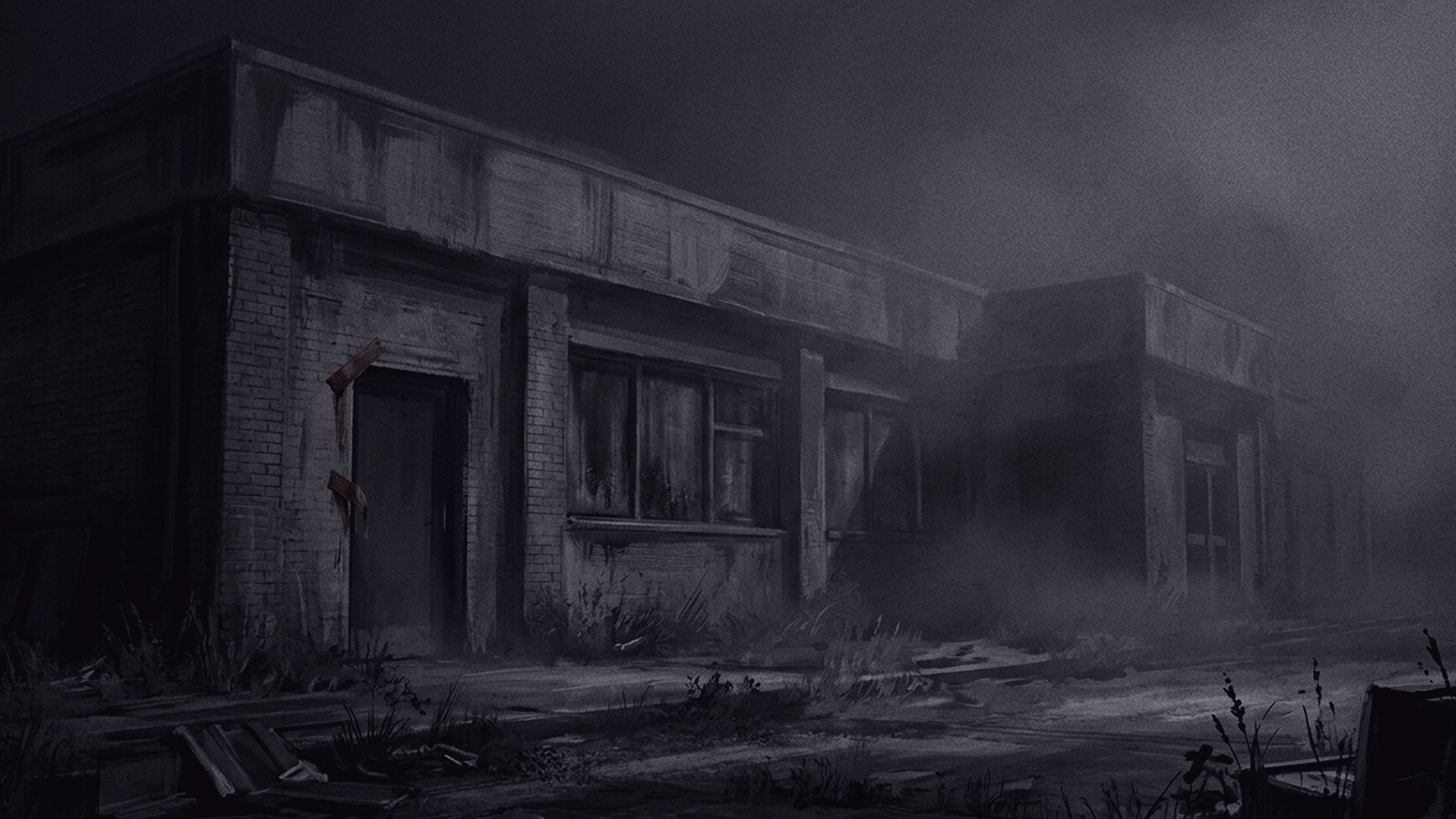
Ezra Halloran stood at the edge of Patient 143’s bed, the aluminum clipboard cold against his knuckles, checking the bundle of braided leads running from the woman’s scalp down to the junction box on the baseboard. The smell of collodion adhesive was thick in the room, sour and chemical, masking the sharper tang of bleach from the linoleum floor.
"Temperature is holding steady at 97.4," he said.
Across the four feet of linoleum between the bed and the desk, Dr. Rodriguez did not look up from her console. Her glasses caught the glare of the cathode monitor, two green squares reflecting the stepped waveforms of the EEG readout as they scrolled from right to left across the raster. She nodded once, her jaw set, her right hand resting flat against the edge of the keyboard housing.
Ezra stepped to the patient’s right wrist. The pulse oximeter clip pinched the nail bed with a constant, spring-loaded pressure, its tiny red diode burning through the yellowed keratin. Ninety-eight percent saturation. The pulse was sixty-two beats a minute, regular and thin. Beneath the fitted sheet, the mattress was three inches of high-density hospital foam that did not yield to the woman’s heels. The two monitoring units on the rack above her head kept rhythm: a soft, hydraulic click every four seconds, followed by the dry metallic hum of the cooling fan inside the housing. Ezra had worked the night shifts in Unit 4 since October, five nights a week from eleven to seven, and the sequence of noises was as familiar to him as the scrape of his own key in the apartment door.
Patient 143 stirred. Her lips, dry and cracked down the center, parted with a faint adhesive smack. Her eyelids twitched three times in rapid succession, fluttering open just far enough to show the cloudy white above the lower rims before settling back into the dark hollows of her sockets.
Ezra clicked his ballpoint pen and wrote on the pre-printed grid of the intake sheet: 03:48. Slight increase in movement during Stage III slow-wave activity.
Behind him, Dr. Rodriguez’s grease pencil squeaked against the heavy paper of the strip-chart recorder. She made four short marks, the strokes hard enough to leave indentations through to the second sheet of carbon, and then tore the edge of the margin with the side of her thumb.
Ezra stepped back to the small utility cart beside the washbasin. His layout was strict: three white tablets of zolpidem tartrate in a clear plastic specimen envelope, a six-ounce paper cup filled three fingers deep with tap water, and his brushed-steel thermos. He picked up the thermos by its ribbed handle. It was an old twelve-ounce Stanley with dented shoulders, heavy enough to tell him Dr. Rodriguez had taken only two small cups during her break at three. The body of the flask was cool, but the screw cap retained a faint circle of heat. He poured three ounces into the black plastic lid. The coffee was lukewarm, tasting of scorched chicory and metal, and it left a thin, greasy coating across the back of his tongue as he swallowed.
The cardiac monitor on the upper shelf emitted two high, sharp pings.
Dr. Rodriguez leaned forward, her shoulder blades tenting the green cotton of her scrub tunic, and tapped three keys on the console’s numeric pad. The tone flattened into a low, even interval.
"Sorry about that," she said. Her voice had the flat, spent quality of someone who had been speaking into microphones all night.
Ezra set the paper cup down next to the envelope of pills. The room was eleven feet by fourteen, walled in cinder block painted with three coats of semi-gloss institutional cream. To his left stood the patient’s bed with its tubular steel rails locked in the raised position. To his right sat the workstation: two CRT monitors, the strip chart, and Dr. Rodriguez’s swivel chair with its torn vinyl armrests. Directly behind him was the door to the secondary supply closet, where the clinic kept extra boxes of lead wires, electrode paste, and five-gallon jugs of floor wax.
The latch had not caught. The door stood open half an inch, exposing a dark vertical seam between the painted jamb and the wood-veneer slab.
Ezra noticed it because the draught had changed. The air conditioning vent above the sink blew downward at sixty-two degrees, smelling of damp dust and Freon, but the air drifting out of the closet seam was thick and warm. It carried the faint, greasy odor of fried pork chops and cabbage—the heavy steam of a meal cooked hours earlier in the ground-floor cafeteria, lingering in the fabric of a grey utility jacket that hung from a brass coat hook just inside the darkness.
The jacket belonged to one of the night orderlies. Rodriguez had mentioned at midnight that two men from maintenance were splitting shifts with the linen staff because of the freeze on hiring. One of them had likely ducked into the storage bay to grab a crate of paper gowns and left the bolt disengaged when the strike plate jammed.
Ezra walked the four paces to the door, the thermos lid balanced in his left hand, and pushed the slab with the flat of his palm. The latch clicked into the strike plate with a dull, leaden snap.
He walked back to the cart, the soles of his white rubber-soled shoes sticking slightly to the wax. Rodriguez was typing now, eight fingers moving with mechanical certainty over the grey mechanical keys, her eyes fixed on the green phosphor trace.
As Ezra picked up his ballpoint, a dull pressure settled against the base of his neck.
It was not sharp. It felt like the broad pad of a thumb pressing into the flesh just above the fifth cervical vertebra, heavy and persistent, the way muscle tissue tightens when a draft hits the skin after hours under fluorescent tubes. He rolled his shoulders once, feeling the dry crunch of cartilage in his left trapezius, and raised the height of the stool by two inches using the lever under the ring. He took another sip of the coffee. The chicory burn lingered in the groove behind his back molars.
He set the cup down and reached for the box of disposable alcohol wipes to begin the four o'clock supply count.
Then he felt it again.
This time it was not broad. It was a single, cold point of contact on the left side of his neck, two inches below the earlobe and half an inch behind the sternocleidomastoid muscle. It was light, the weight of a dry fingernail resting against the skin, neither pushing nor withdrawing.
This is a muscle spasm. Nothing more.
He did not turn immediately. He kept his fingers on the cardboard lip of the wipe box, counting the foil packets inside: twenty-two, twenty-three, twenty-four. Across the room, Dr. Rodriguez’s grease pencil began to scratch again. It was a rhythm he knew: five quick strokes, a pause, two longer drags across the paper.
He looked at her over his right shoulder.
Dr. Rodriguez was not holding the grease pencil. Both of her hands were flat on the grey laminate surface of the desk, three inches on either side of the keyboard, her fingers relaxed and motionless. She was staring straight into the scrolling EEG display.
The sound of the scratching continued.
It was coming from four feet above Ezra’s head, directly out of the perforated acoustic tile beside the return-air register. The noise was dry and papery, like a stiff card being dragged across the ribs of an air duct, deliberate and slow.
Ezra tilted his chin up. The ceiling was eight feet from the floor, composed of two-by-four-foot mineral fiber tiles held in an aluminum grid. Around the edges of the return vent, the white paint was stained with a ring of brown water marks shaped like interlocking fingers. There was no hole in the tile. There was no movement along the aluminum runners.
He looked back at Rodriguez. Her profile was grey in the CRT glow, her nose sharp, her thin lower lip tucked slightly behind her incisors. She did not blink.
"Rodriguez," he said.
The word seemed to drop straight to the floor, absorbed by the acoustic panels before it reached the desk. She did not twitch. Her gaze remained locked on the trace of Patient 143’s alpha rhythm.
Ezra looked toward the bed.
At the foot of the mattress, folded into a tight square against the steel footboard, was a man’s twill work jacket. The fabric was a dull, oil-stained navy, the cuffs frayed down to the white reinforcement threads. The brass zipper was pulled three-quarters of the way up, its teeth dull with grease. Ezra had not seen it when they wheeled the woman in from admitting at eleven. He had stripped the gurney himself, transferred her across the slide board, and tucked the coarse white sheets beneath her hips. There had been no jacket. Rodriguez had logged only a vinyl purse containing twenty-six dollars, an expired bus pass, and a plastic comb.
He laid the ballpoint pen in the groove of the cart. His mouth had gone sour, the taste of chicory turning into something like stale iron filings under his tongue.
He walked past the foot of the bed toward the wall telephone mounted next to the primary exit. He lifted the heavy black handset to his ear. There was a dial tone, but it was low, vibrating at an unfamiliar pitch that made the small bones of his inner ear ache with a dull, throbbing pressure. He pressed 0 for the main clinic switchboard.
The tone cut out. The line clicked six times, three seconds apart, before an automated operator spoke. The voice was female, flat and compressed through a narrow bandwidth:
"Admitting Unit 4 is operating under protocol thirty-one. Routine inquiries will be logged at the start of the morning cycle. Please hold for the technician."
Ezra pulled the handset away from his face. The cord was four feet long, coiled black plastic that hung down in rigid, overlapping loops. He hit the hook with his index finger, held it down for four seconds, and punched the seven-digit extension for the ground-floor security kiosk.
The same six clicks followed. Then the same voice, identical in speed and timbre:
"Admitting Unit 4 is operating under protocol thirty-one. Routine inquiries will be logged at the start of the morning cycle. Please hold for the technician."
Ezra hung the receiver on its cradle. The plastic clicked into the bracket, but the sound was thin, like dry bone striking wood.
He took his mobile phone from the pocket of his trousers. The glass screen lit up: 4:17 a.m. The battery indicator in the upper right corner was a hollow red bar showing four percent. There were two bars of signal, but the network name was gone, replaced by a five-digit numeric string: 00143.
He stared at the numbers until the screen dimmed, went black, and refused to respond to the home button.
The room was nine degrees colder than it had been at three. The air coming from the ceiling register no longer smelled of Freon; it smelled of river silt, cold iron, and old water sitting in a cellar drain. Ezra walked back to the console desk and reached across Rodriguez’s shoulder for the heavy red-cloth logbook.
He opened the cover to the daily shift page.
The columns were printed in blue ink: Time, Subject ID, Mean Pressure, Pulse, Stage, Technician Signature.
From 23:00 to 03:00, the lines were filled in his own neat, upright hand: baseline checks, calibration sequences, the initial administration of the sedative. But the rows for 03:15, 03:30, and 03:45 were blank. The grid had not been filled. In the margins, where Rodriguez usually initialed the equipment status, there were only long, irregular lines drawn with a hard lead pencil—horizontal strokes that cut across the ruled borders and drove off the edge of the paper, scoring deep trenches into the cardboard backing of the binder.
Across the bottom of the page, written in three jagged lines that looked as if they had been scratched with a rusty nail, were the words:
04:19. STAGE IV COMMENCEMENT.
Ezra checked the digital clock on the face of the console: 4:19 a.m.
The overhead fluorescent fixture over the bed flickered once, the ballast buzzing with the sound of a trapped hornet, and then went dark. The only illumination left in Unit 4 came from the twin phosphor screens on the desk and the small yellow indicator lights on the oximeter.
Outside in the corridor, four inches beyond the heavy oak door, something scratched against the drywall.
It was three feet from the floor, moving horizontally. It sounded like four dry fingernails dragging across the rough paper surface of the sheetrock, moving five inches at a time, then pausing. Two seconds of silence. Then another five inches. It was approaching the door from the north end of the wing, where the empty offices were.
Ezra backed away from the desk until his hips hit the edge of the utility cart. The steel frame rattled against the wall, the small paper cup of water trembling until concentric rings formed on the surface.
The clock on the monitor ticked over: 4:20 a.m.
It is the night orderly, he told himself. He is carrying a ladder. The legs are dragging on the baseboard.
The scratching stopped at the frame of the door.
For twelve seconds there was no sound except the click-hum of the monitoring units and the wet, shallow breathing of Patient 143. Then came the tap.
It was not a knock. It was the single, precise impact of a knuckle against the bottom panel of the door, four inches above the brass kick plate. Then another, six inches higher. Then a third, dead center in the wood.
Ezra’s breath came through his teeth, dry and thin. The smell of cold grease from the storage closet was gone now, replaced entirely by the sharp, metallic stink of ozone, like an old electric train transformer run at full throttle until the coils smoke.
4:21 a.m.
A fine, high-frequency vibration rose through the soles of his shoes. It was not in the floorboards; it was in the concrete slab beneath the linoleum, a hum that traveled up the tibia and settled behind his kneecaps.
Through the four-inch frosted glass window in the hall door, the yellow emergency light from the corridor did not show an orderly or a maintenance cart. There was only a shadow, six feet tall and narrow as an upright plank, standing so close to the glass that the weave of its coarse coat fabric was pressed flat against the pane.
Then, from the dark air directly behind his left shoulder, two inches from his jaw, cold fingers closed around the back of his neck.
The grip was broad and absolute. The thumb pressed hard into the hollow beneath his mastoid process, while four long fingers hooked over the right clavicle, pulling his head backward until his chin pointed toward the stained ceiling tiles.
The fingers were not skin. They were as hard as seasoned oak, slick with some clear, unscented grease that felt like lard.
This is how they take you.
Ezra tried to inhale, but his windpipe was compressed between the pads of the fingers. His larynx gave a small, wet click as the cartilage buckled. He reached up with both hands, his fingernails clawing at the wrists of the thing behind him, but his palms found only the rough, wool-twill sleeve of an orderly’s tunic, soaked in cold moisture that smelled of the mortuary drain.
His white rubber-soled shoes scrambled on the waxed linoleum, finding no purchase. The console monitors flickered, their green raster lines collapsing into bright horizontal threads that burned blue against the walls.
The doorframe in front of him looked crooked now. The vertical jamb was tilted four inches out of true, leaning inward like a broken door on a sinking barge. The walls did not seem square; they seemed to be folding toward the center of the ceiling, the cinder blocks sliding over one another with the dry, grinding sound of millstones.
Behind him, Dr. Rodriguez’s swivel chair began to drag across the floor.
The sound was agonizingly slow: the scrape of steel casters through dried floor wax, inch by inch, hitching every few seconds as a wheel caught on an uneven seam in the tile. The metal groaned under a heavy, dead weight.
Ezra’s eyes watered from the ozone. The fingers on his neck tightened further, the nails biting through the skin of his collarbone until he felt four distinct trickles of warm blood run down over his sternum.
Behind his left ear, someone was breathing. It was not the rhythmic, measured respiration of a doctor. It was rapid, shallow, and wet, like air being sucked through a wet sponge. Each exhale was cool against his lobe, carrying the smell of stagnant water and cold mutton fat.
The chair stopped. The front edge of its seat bumped against the back of his calves.
The blue raster lines on the monitor screens suddenly flared into blinding white strobes, snapping on and off with the rhythm of a high-speed shutter: light, dark, light, dark. In the flashes, Ezra saw the hands holding him. They were white, hairless, and long—the index and middle fingers fused together into a single broad spade of flesh tipped with a flat, horn-colored nail.
He tried to scream, but the sound died in his pharynx as a dry cough.
The monitor beeped once. It was a clear, melodic chime that had nothing to do with the heart equipment.
"Sleep phase initiation protocols engaged," a synthetic voice said from the small speaker in the console housing.
The fingers on his neck relaxed.
They did not withdraw; they simply went limp, the pressure softening until they rested against his throat like heavy, cold dough.
Ezra staggered two steps forward, his white rubber-soled shoes hitting the leg of the cart. The paper cup fell, spilling its three fingers of water across his shoe. He turned around, his back pressed against the metal edge of the patient’s bed, his chest heaving as he dragged the freezing air into his lungs.
Dr. Rodriguez was standing beside the swivel chair.
Her green scrubs were clean, but her arms were bare to the elbows, her skin pale and dry under the strobe light. Her eyes were not on the screen. They were wide, fixed on Ezra’s face, her pupils dilated until the dark brown irises were nothing more than narrow rims against the white. There was no expression on her mouth—no fear, no anger, only the cold, mechanical attention of a clerk verifying an invoice.
The console screen stabilized. The green text cleared, replaced by three lines of high-density font:
SUBJECT: HALLORAN, EZRA. RUN TIME: 03 HOURS, 18 MINUTES. CYCLE IDENTIFIER: UNIT 4 SIMULATION.
Ezra stared at the screen. The letters did not shift.
Underneath the intake clipboard on the cart, the corner of the pink carbon sheet showed the name he had ignored since eleven: Halloran, E. Room 143. He had looked at it six times during the shift and read it as the technician’s assignment code. He had signed his own name in the box marked Patient.
Dr. Rodriguez took one step toward him. Her hand, normal and pink under the returning fluorescent glow, reached out and touched the side of his neck where the skin was torn. Her touch was firm and entirely professional.
"It's okay, Ezra," she said softly. Her tongue moved behind her teeth with the dry, rhythmic click of a clock escapement. "You're doing very well. We’re almost at the third stage."
He tried to pull his head back, but the wall was behind him, and the foam mattress of the bed seemed to rise up behind his shoulders, soft and grey, smelling of the laundry room in the sub-basement.
The room did not vanish. It merely flattened, the green light fading into the dull, even grey of an overcast dawn seen through painted glass.
***
At 4:43 a.m., Dr. Rodriguez sat at the steel laminate desk in Records Room B on the fourth floor of the clinic’s administrative wing. The room was twelve feet square, lined with grey five-drawer filing cabinets, and smelled of warm laser toner and damp paper.
She picked up her ceramic mug, which bore the blue shield of the state university, and took a sip of black coffee. It was still hot enough to sting her lip.
On the sixteen-inch flat-panel display in front of her, the overnight batch report was compiling. She touched the spacebar twice, clearing the print queue, and scrolled down the list of active clinical trials.
The cursor stopped on File 88-143: Halloran, Ezra.
The entry was flagged with a red border, indicating an accelerated cycle. She clicked the entry to expand the data fields. The digital strip chart scrolled down the center of the display: 3.2 hours of Stage III slow-wave activity, 2.1 hours of REM, and forty-two discrete spikes in autonomic arousal between 04:15 and 04:22.
She reached for her grease pencil, then remembered the keyboard, and typed four characters into the notes field: A-D-A-P.
She clicked Print.
The laser printer beside the water cooler gave a mechanical whine, picked a sheet from the lower tray with three distinct thumps, and slid the warm paper into the output hopper.
Dr. Rodriguez took the sheet, checked the signature line at the bottom, and placed it inside a manila folder marked Group 4: Non-Responsive. She laid the folder in the grey plastic bin labeled Morning Administrative Review.
She looked up at the nine-inch security monitor mounted to the wall above the filing cabinets.
Camera 12 showed Room 143. The room was dark except for the single yellow night-light above the sink. On the bed, the form under the white cotton sheet was motionless, the straps across the chest and thighs secured with brass buckles to the tubular steel frame. Outside the heavy oak door, an orderly in a grey twill jacket sat on a metal folding chair, his arms crossed over his chest, his head tilted forward against his collarbones as he watched the empty hallway.
Dr. Rodriguez set her mug down on the blotter.
She reached up with two fingers to adjust the collar of her tunic, her fingernails brushing the skin of her neck two inches below the left earlobe. There were three small, red scratches there, fresh enough that the edges had not yet scabbed over, stinging slightly as her sweat touched the raw skin.
She did not look at them in the glass of the monitor. She picked up the next folder from the intake pile, opened the metal fastener with the flat of her thumb, and began to read the admission vitals for the five o'clock arrival.